Gallery & Learning Center
Educational resources covering OSSF system types, functional principles, and treatment comparisons.
System Methodologies
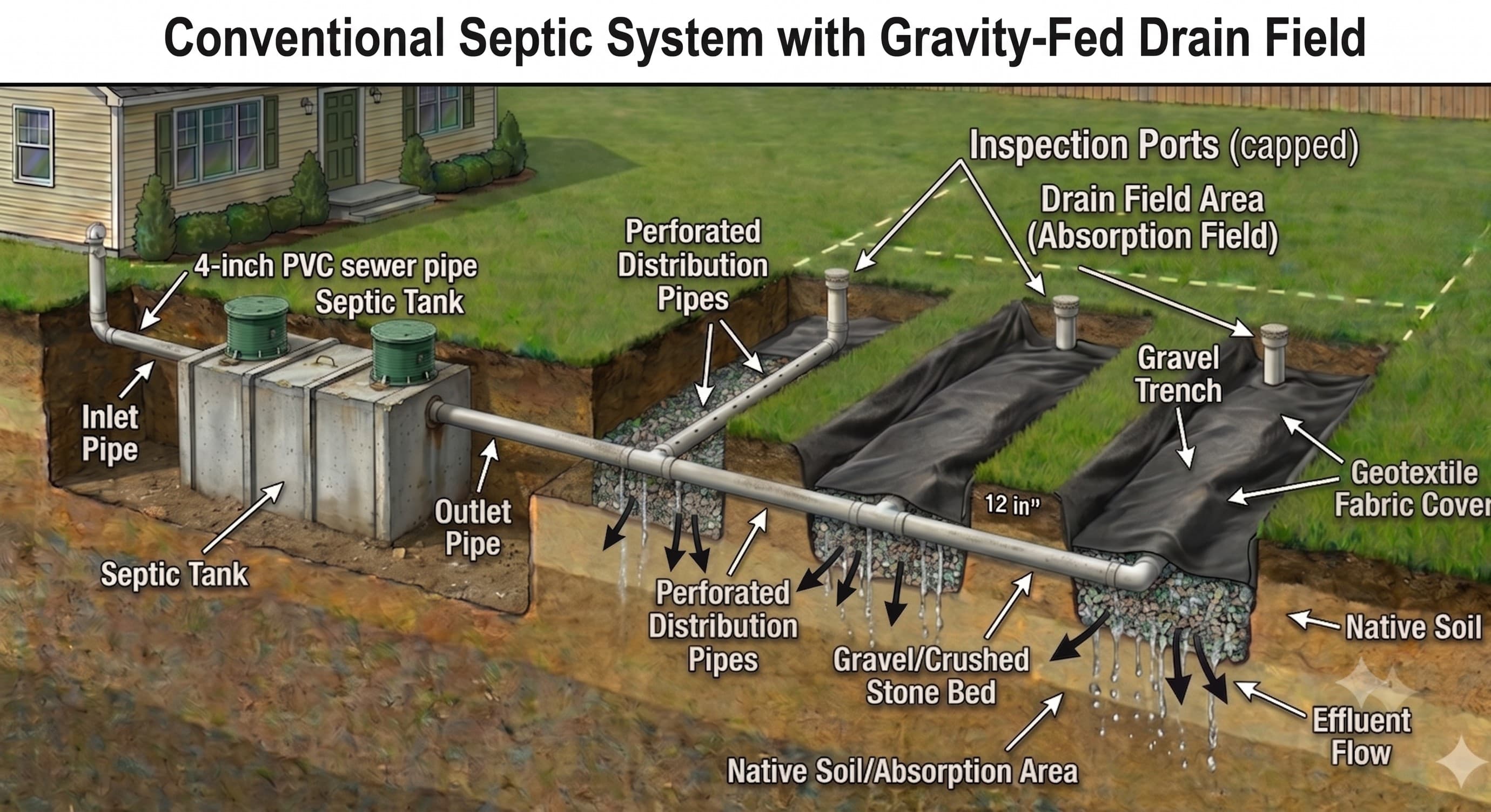
Conventional System
A standard system utilizing a septic tank for primary settling and a network of perforated pipes installed in gravel-filled trenches for soil absorption.
Key Components
- Septic tank
- Gravel trench
- Perforated pipe
- Native soil interface
Advantages
- • Does not require electricity
- • Lower initial installation cost
- • Minimal mechanical maintenance
Limitations
- • Requires suitable deep soils (Class Ib, II, III)
- • Requires larger drainfield area
- • Susceptible to root intrusion in gravel
Typical Applications
Rural or suburban residential lots with deep, well-drained soils and ample available space without tight topographical constraints.
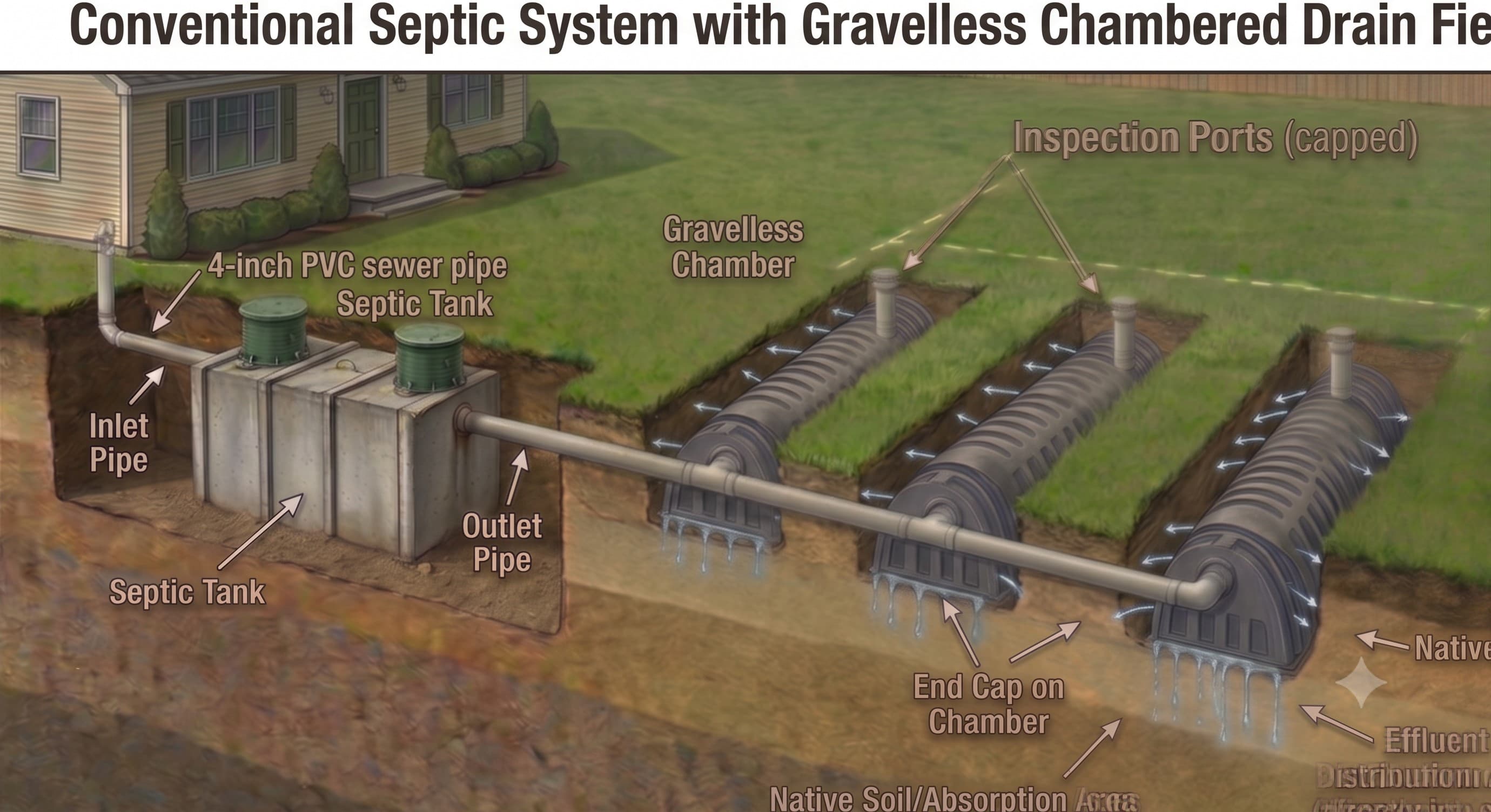
Gravelless Chamber System
An alternative to gravel trenches, this system uses a series of connected, bottomless plastic chambers providing a void space for effluent to contact the soil directly.
Key Components
- Septic tank
- Chamber units
- Endcaps
- Soil interface
Advantages
- • Often allows for a reduced drainfield footprint
- • Easier to install (no heavy gravel needed)
- • Better aeration within the trench
Limitations
- • Cost of chambers vs. local gravel
- • Still requires suitable absorptive soils
Typical Applications
Similar to conventional systems but frequently utilized where space is slightly more limited or where clean gravel is difficult to source.
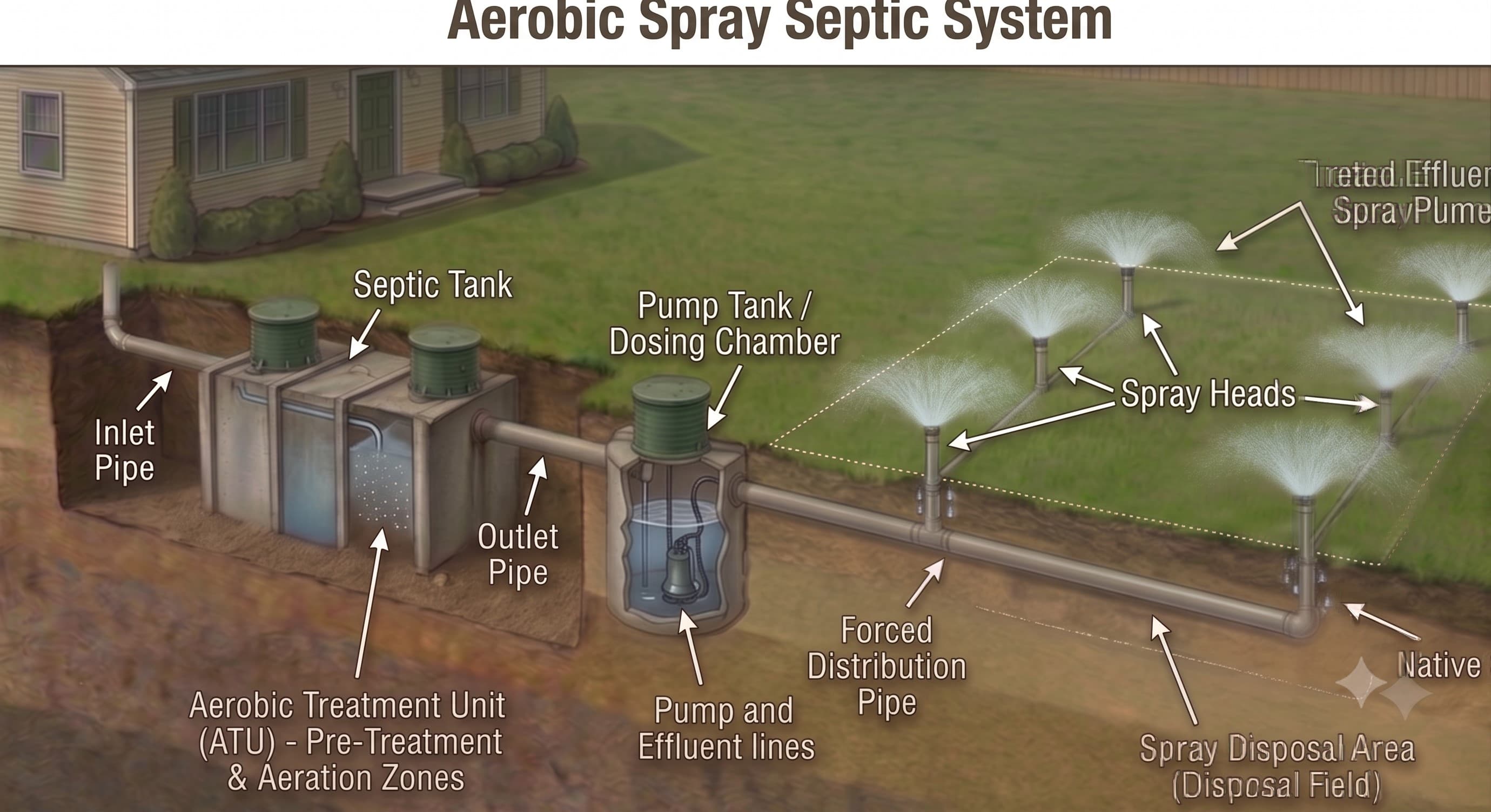
Aerobic Spray System
Combines an Aerobic Treatment Unit (ATU) to highly treat wastewater with a surface application (spray) distribution method.
Key Components
- Trash tank (Primary settling)
- Aeration chamber
- Clarifier
- Pump tank
- Disinfection device (Chlorinator)
- Spray field / vegetation
Advantages
- • Suitable for heavy clay soils (Class IV) or shallow rock
- • Highly treated effluent reduces environmental impact
Limitations
- • Requires electricity and mechanical maintenance
- • Requires periodic chemical addition (disinfectant)
- • Stricter setback requirements for spray fields
Typical Applications
Widespread throughout Texas in regions with restrictive Class IV clay soils or where extremely shallow bedrock prevents subsurface trenches.
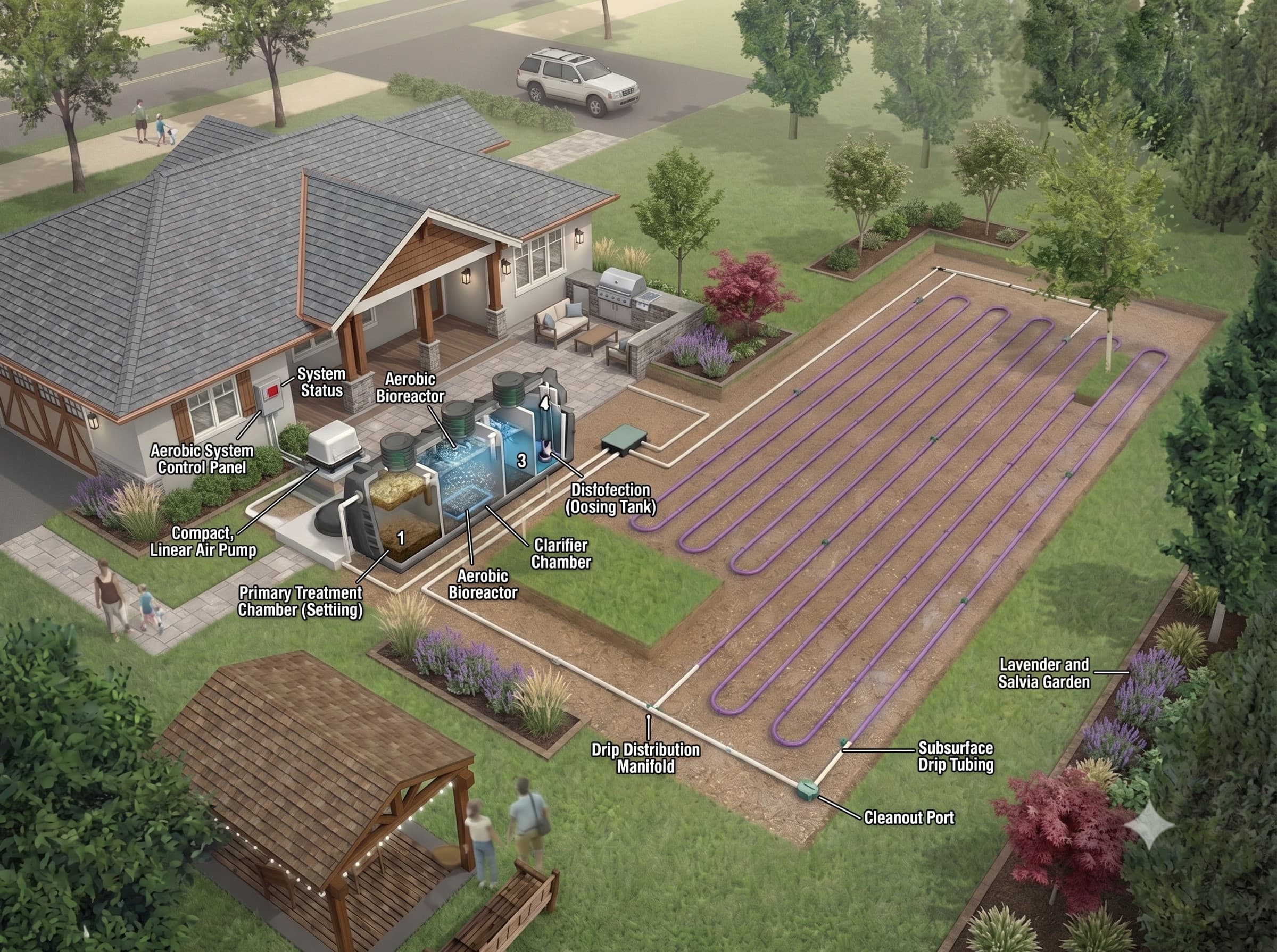
Aerobic Drip System
Utilizes an ATU for treatment followed by subsurface drip irrigation tubing, combining advanced treatment with discreet dispersal.
Key Components
- ATU (Trash/Aeration/Clarifier)
- Pump tank, filter, and controls
- Pressure compensating drip emitters
- Irrigation field
- Native/imported soil interaction
Advantages
- • Can be used to irrigate landscaping
- • No surface exposure of effluent
- • Flexible tubing can navigate irregular lot shapes
Limitations
- • High initial cost and installation complexity
- • Filters require regular cleaning to prevent emitter clogging
Typical Applications
Residential properties, lots with irregular topography, or areas where surface spray is not desired or permitted.
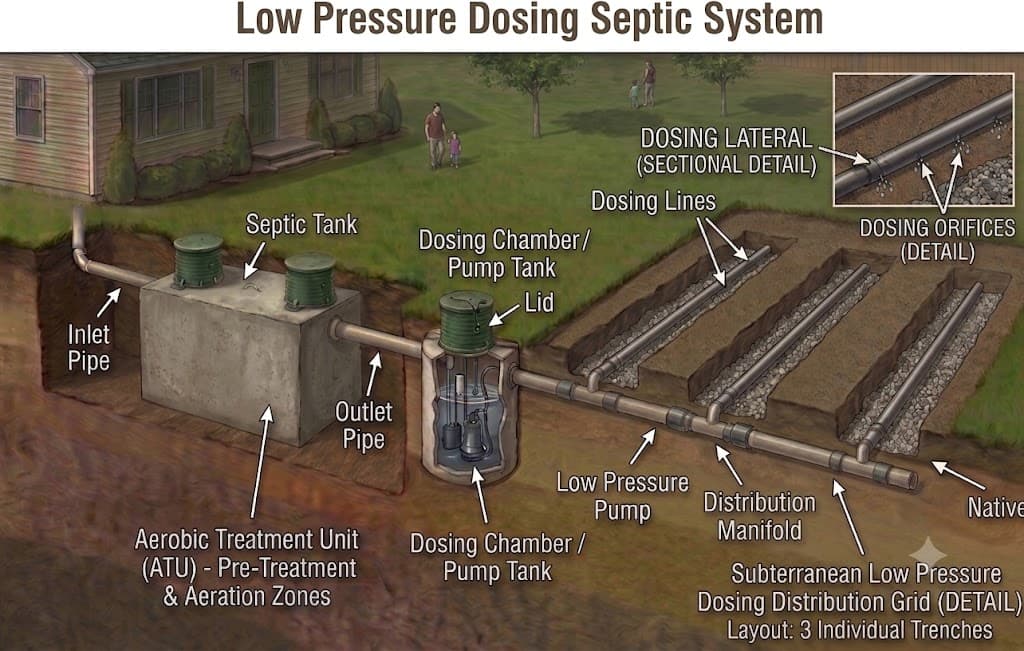
Low Pressure Dosing (LPD) System
A subsurface drainfield system where effluent is pumped under low pressure through a manifold and small orifices to distribute it evenly across the entire absorption area.
Key Components
- Dose tank
- Pump and floats
- Pressure manifold
- Distribution laterals (small diameter)
- Orifices
Advantages
- • Prevents localized overloading of trenches
- • Allows for shallower trench installation
- • Dosing/resting cycles improve soil treatment
Limitations
- • Requires a pump and electricity
- • Orifices can clog without proper filtration
Typical Applications
Sites with marginal soil depth or slowly permeable soils where distributing the hydraulic load evenly is critical to system success.
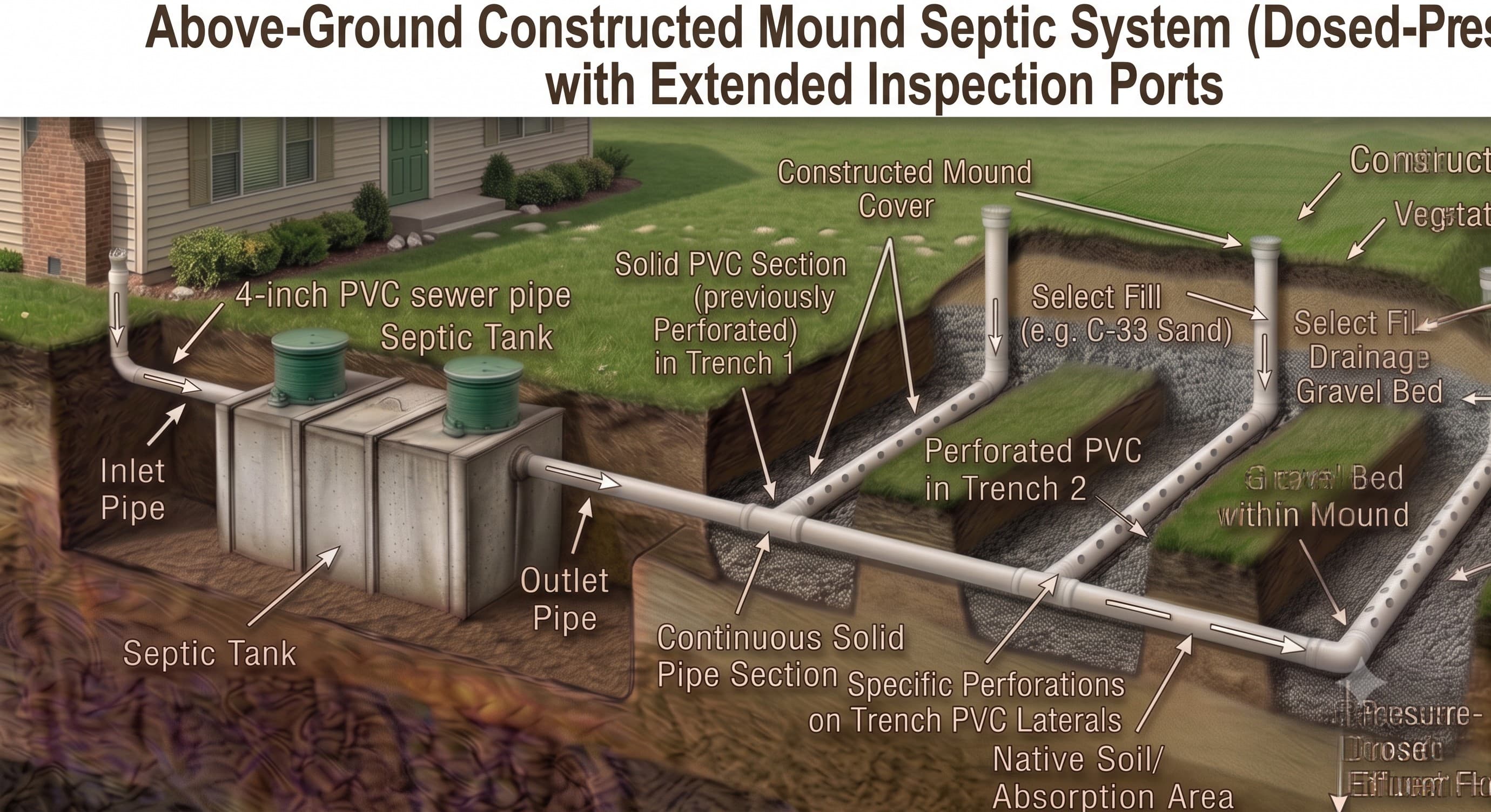
Mound System
A drain field elevated above the natural soil surface using sand fill to ensure adequate depth for treatment.
Key Components
- Sand media
- Perforated Pipe
- Pressure distribution network (Occasionally)
- Native absorptive soil
- Elevated mound
Advantages
- • Provides necessary treatment depth where natural soil is inadequate
- • Protects high groundwater tables
Limitations
- • High construction cost due to imported materials
- • Alters the natural landscape topography
- • Requires pressure dosing (Occasionally)
Typical Applications
Properties specifically restricted by high water tables or extremely shallow bedrock.
Treatment Comparison: Septic Tank vs ATU
Understanding the fundamental processing differences in primary wastewater treatment configurations. Evaluated from standard wastewater treatment principles.
01 Conventional Septic Tank
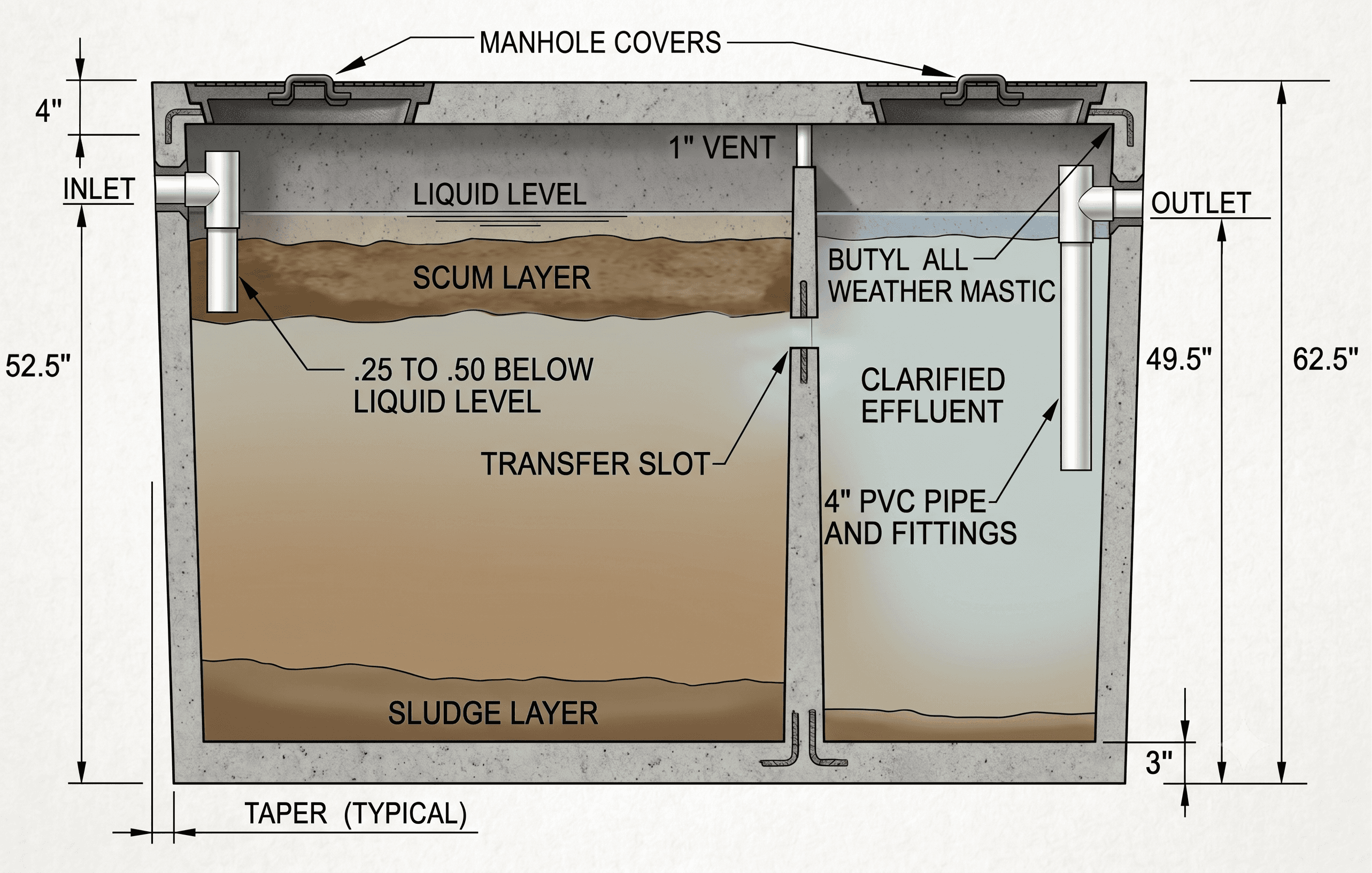
Wastewater enters tank from the source structure.
Heavy solids settle to the bottom (sludge layer).
Lighter materials and fats float to the top (scum layer).
Anaerobic bacteria (living without oxygen) slowly decompose organic matter.
Clarified effluent exits the tank through a specialized baffle.
Final treatment occurs in the soil trench (drainfield) via natural biological action.
02 Aerobic Treatment Unit (ATU)
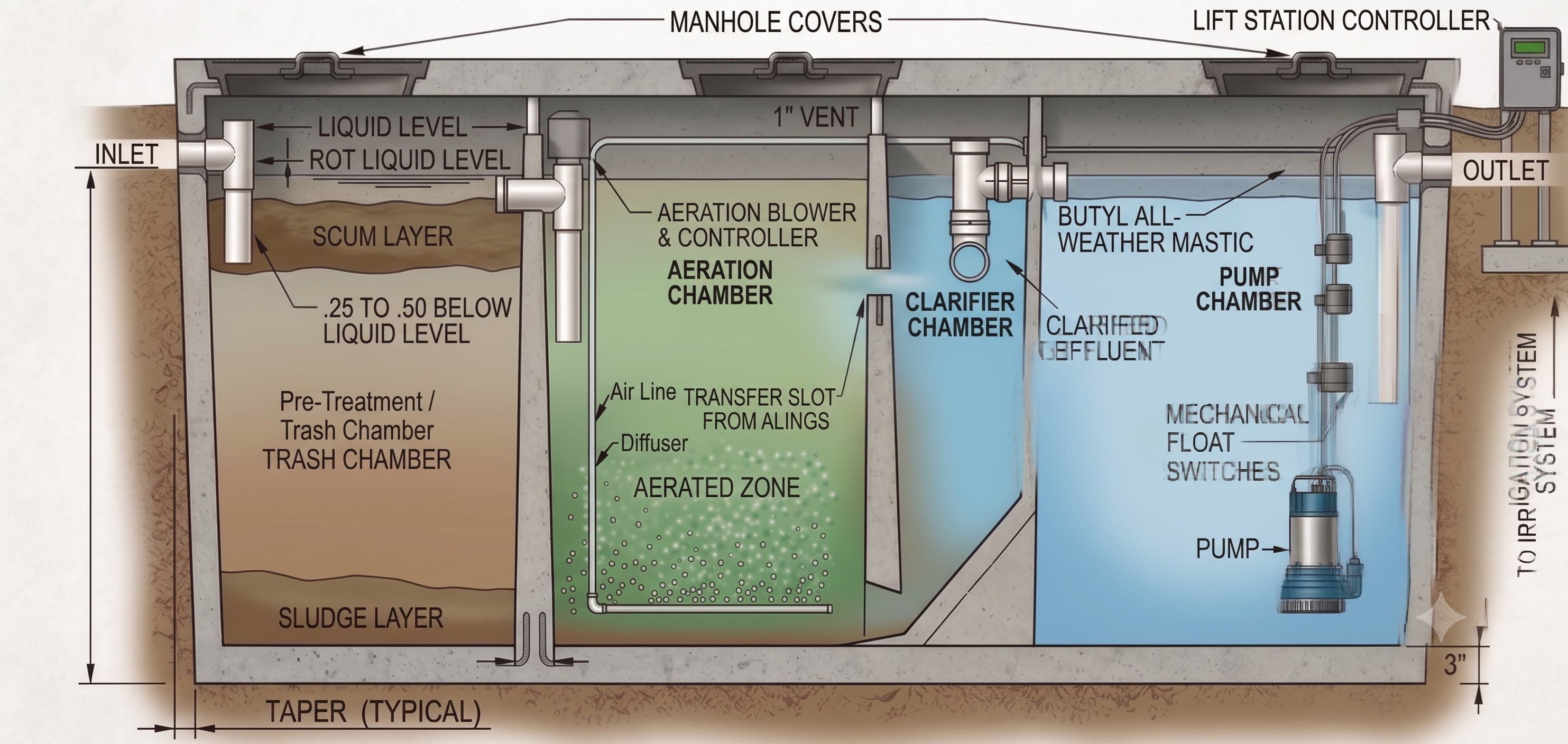
Pretreatment (Trash Tank): Initial settling of heavy solids and separation of non-biodegradable items.
Aeration: Air compressor injects oxygen continuously into the treatment chamber.
Oxygen Transfer: Thorough mixing of air and wastewater.
Biological Treatment: Aerobic bacteria rapidly consume and digest organic contaminants.
Clarification: Quiet zone where beneficial bacteria settle and return to the aeration chamber.
Disinfection (where applicable): Effluent passes through a chlorinator or UV light to destroy pathogens.
Final Dispersal: Highly treated water is safely applied via spray, drip, or specialized drainfield.
| Parameter | Conventional Septic Tank | Aerobic Treatment Unit (ATU) |
|---|---|---|
| Treatment Quality | Primary (Settling & partial digestion) | Advanced (Highly treated, minimal organics) |
| Effluent Characteristics | High in suspended solids & biological demand | Clear, low suspended solids, highly treated |
| Maintenance Requirements | Low (Periodic 3-5 yr pumping) | Moderate/High (Electrical checks, filters, disinfectants) |
| Electrical Requirements | None (Gravity-fed typically) | Required (Air compressor, pumps) |
| Typical Applications | Good, deep soils on larger lots | Poor soils (rock, clay), small lots, sensitive areas |
Disclaimer: The information provided on this website is for general informational purposes only. While Higher Ratings LLC strives to keep all content accurate, current, and reliable, we make no representations or warranties of any kind, expressed or implied, regarding the completeness, accuracy, suitability, or availability of any information contained on this site. Regulations, permitting requirements, and septic system standards may vary by jurisdiction and are subject to change. Higher Ratings LLC shall not be liable for any loss, damage, or consequences arising from reliance on information provided on this website.